
In assisted reproductive technology (ART), the debate between fresh embryo transfer and frozen embryo transfer (FET) continues as clinicians and patients strive to personalize IVF for the best outcomes. Both strategies are supported by scientific evidence, yet their advantages and limitations differ depending on the clinical scenario.
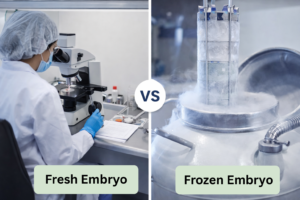
What Are Fresh and Frozen Embryo Transfers?
In a fresh embryo transfer, embryos are placed into the uterus shortly after fertilization (usually within days of egg retrieval), without being cryopreserved. In contrast, frozen embryo transfer involves freezing embryos — typically by vitrification — and transferring them in a later menstrual cycle after uterine preparation.
The Case for Frozen Embryo Transfer (FET)
Advances in cryopreservation have made frozen transfers highly effective and safe. A large meta-analysis shows that babies conceived from FET have lower risks of preterm birth, low birth weight, and being small for gestational age compared to fresh transfers. FET also reduces the risk of ovarian hyperstimulation syndrome (OHSS) — a serious complication of ovarian stimulation — especially in women who produce a large number of follicles.
The ability to wait and optimize the uterine environment, plus the option to perform preimplantation genetic testing (PGT-A) before transfer, are additional reasons many clinics favor FET.
In certain subgroups, such as hyper-responders (women who produce many eggs) or patients using genetic testing, elective FET has been linked to higher live birth rates than fresh transfers. These data suggest that FET offers a clinical advantage when a patient’s physiology might be less receptive in the stimulated cycle.
The Value of Fresh Embryo Transfer
However, FET isn’t always the best choice for everyone. Fresh transfers may be advantageous when embryo numbers are limited — for example, in women with low ovarian reserve or poor responders — because fresh embryos bypass the potential risk of damage from freeze-thaw cycles and avoid delays that can come with frozen cycles. A recent large clinical study found that women with a poorer prognosis had higher live birth rates with fresh transfer than with freezing all embryos. Also, fresh cycles typically mean a shorter time to pregnancy, since there is no need to schedule a subsequent cycle for transfer. Importantly, randomized controlled trials summarized in systematic reviews show that cumulative live birth rates are often similar between fresh and freeze-all strategies when looking at the whole IVF journey. This supports the idea that neither approach is universally superior.
Clinical Considerations: When to Choose What?
Clinicians often recommend FET in cases such as:
- High ovarian response with risk of OHSS
- Elevated hormone levels that may impair endometrial receptivity
- Need for genetic testing before transfer
FET (Frozen Embryo Transfer) may be appropriate when:
- Few eggs/embryos are available
- Patient preference is to avoid freeze/thaw stress or delay
- Immediate transfer may maximize chance of implantation
Ultimately, individual factors such as age, ovarian reserve, embryo quality, uterine receptivity, and health risks should guide the decision. These decisions are best made collaboratively between patient and clinician, rather than assuming one strategy is best for all.