
Fibroids, also called myomas or leiomyomas, are common benign growths of the uterus. Many women with fibroids conceive naturally and have normal pregnancies. However, fibroids can affect fertility and pregnancy in selected cases, depending mainly on their location, size, number and relationship to the uterine cavity. 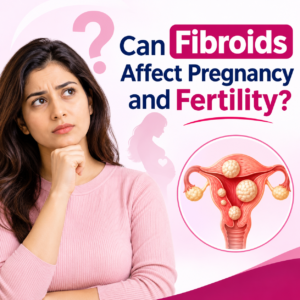
Broadly, fibroids may be divided into three groups: submucous fibroids, which project into or distort the uterine cavity; intramural fibroids, which are present within the muscular wall of the uterus; and subserous fibroids, which grow on the outer surface of the uterus. The FIGO classification is more detailed, but for patient understanding, this simple division is useful.
Submucous Fibroids: Usually Need Removal
Fibroids that enter or distort the uterine cavity are most clearly associated with reduced fertility. The uterine cavity is where the embryo implants. If a fibroid is sitting inside this space, it may interfere with implantation, increase miscarriage risk, cause abnormal bleeding or affect early pregnancy development.
Therefore, submucous fibroids or intramural fibroids that distort the cavity usually need removal before fertility treatment or embryo transfer. In many cases, this can be done by hysteroscopic myomectomy, where the fibroid is removed through the cervix without an abdominal incision.
Subserous Fibroids: Usually Less Important for IVF
Subserous fibroids are on the outside of the uterus. These generally do not affect embryo implantation because they do not disturb the uterine lining. For IVF treatment, many subserous fibroids can be left alone.
However, very large subserous fibroids can sometimes cause problems by distorting pelvic anatomy. In natural conception, the fallopian tube and fimbrial end must be able to pick up the egg after ovulation. If a large fibroid affects the tubo-ovarian or tubo-fimbrial relationship, natural fertility may be affected. Large fibroids may also cause pain, pressure, urinary symptoms or pregnancy complications, and therefore need individual assessment.
Intramural Fibroids: The Important Grey Zone
The most debated group is intramural fibroids, especially those that do not visibly distort the uterine cavity. Some patients are repeatedly told that a 3–4 cm intramural fibroid is “not touching the cavity” and therefore cannot affect fertility. However, in clinical practice, this may be too simplistic.
Several studies and meta-analyses suggest that even non-cavity-distorting intramural fibroids may reduce implantation, clinical pregnancy or live birth rates in IVF. This does not mean every small intramural fibroid must be removed. But it does mean that such fibroids should not be ignored, especially in women with repeated IVF failure, recurrent miscarriage, long-standing infertility or no other clear reason for failure.
How Can Fibroids Affect Fertility?
Fibroids may affect fertility through several mechanisms. A fibroid may distort the uterine cavity, reduce the space for implantation or alter the contour of the endometrium. It may affect blood flow to the uterine lining and embryo implantation site. Fibroids can also create local inflammation, alter uterine contractions, affect sperm or embryo transport, and change the receptivity of the endometrium.
Intramural fibroids may interfere with the normal muscular function of the uterus. Even without obvious cavity distortion, they may affect implantation through altered vascularity, inflammation, junctional-zone changes or subtle endometrial effects. This is why size, location and previous fertility history must all be considered.
Treatment During Fertility Planning
Treatment depends on the type of fibroid and the fertility plan. Submucous fibroids are usually removed hysteroscopically. Significant intramural fibroids, especially those around 3–4 cm or larger in women with failed fertility treatment, may need consideration for myomectomy. In fertility patients, laparoscopic myomectomy is often preferred when feasible, as it allows removal of fibroids with smaller incisions and faster recovery compared with open surgery.
After myomectomy, the uterus needs time to heal before attempting pregnancy or embryo transfer. The waiting period depends on the size, number and depth of fibroids removed and the type of uterine repair.
In IVF patients, embryo freezing may be useful when the uterus needs further preparation before transfer. In selected cases, especially when there are associated conditions such as adenomyosis or a bulky uterus, downregulation with GnRH agonist before frozen embryo transfer may be considered. This should be individualized and not used routinely for every patient.
The key message is that fibroids should be assessed carefully before fertility treatment. The decision to remove or leave a fibroid should depend on cavity involvement, size, location, symptoms, age, ovarian reserve, previous IVF history and the risk-benefit balance of surgery.
References
- Practice Committee of the American Society for Reproductive Medicine. Removal of myomas in asymptomatic patients to improve fertility and/or reduce miscarriage rate: a guideline. Fertil Steril. 2017;108(3):416-425.
- Saridogan E, et al. Fibroids in infertility: consensus statement from ACCEPT. Hum Reprod. 2011;26(12):3271-3275.
- Rikhraj K, Tan J, Taskin O, Albert AY, Bedaiwy MA. The effect of intramural fibroids without uterine cavity involvement on the outcome of IVF treatment: a systematic review and meta-analysis. Hum Reprod. 2009;24(11):2413-2420.
- Sunkara SK, Khairy M, El-Toukhy T, Khalaf Y, Coomarasamy A. The effect of intramural fibroids without uterine cavity involvement on the outcome of IVF treatment: a systematic review and meta-analysis. Hum Reprod. 2010;25(2):418-429.
- Christopoulos G, Vlismas A, Salim R, Islam R, Trew G, Lavery S. Fibroids that do not distort the uterine cavity and IVF success rates: an observational study using extensive matching criteria. BJOG. 2017;124(4):615-621.
- Metwally M, Cheong YC, Horne AW. Surgical treatment of fibroids for subfertility. Cochrane Database Syst Rev. 2012;(11):CD003857.
- Rikhraj K, Tan J, Taskin O, Albert AY, Bedaiwy MA. Intramural leiomyomas and fertility: a systematic review and meta-analysis. Obstet Gynecol. 2024;144(2):171-179.