
For couples dreaming of having a baby, understanding the difference between natural pregnancy and In Vitro Fertilization (IVF) can be empowering. While both routes can lead to the miracle of life, they are very different paths — medically, emotionally, and biologically.
What Is Natural Pregnancy?
A natural pregnancy occurs when a woman’s egg is fertilized by sperm inside her body — usually in the fallopian tube — and the resulting embryo implants in the uterus. This process depends on healthy ovulation, open fallopian tubes, good sperm quality, and successful implantation. For couples with normal fertility, this is a spontaneous, body-regulated event with minimal medical intervention.
What Is IVF?
In contrast, IVF (In Vitro Fertilization) is a form of assisted reproductive technology (ART) used when natural conception is difficult or unlikely due to infertility.
- Eggs are medically stimulated to grow in the ovaries using hormone injections.
- Eggs are retrieved and fertilized with sperm outside the body in a lab.
- The resulting embryo(s) is cultured, selected, and transferred to the uterus.
- Some couples also use genetic embryo screening before transfer.
How the Processes Differ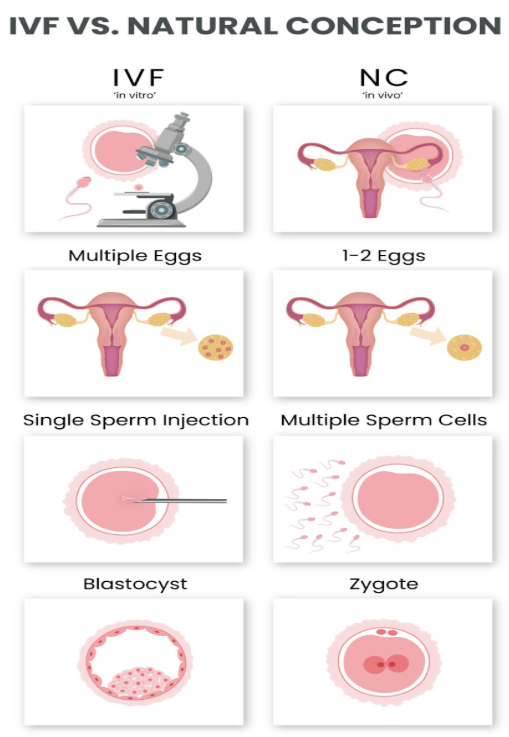
With natural pregnancy, conception relies on timing, biology, and chance. In IVF, each step is carefully orchestrated by clinicians, from stimulating multiple eggs to choosing the embryo most likely to succeed.
Most women undergoing IVF begin hormone medications before pregnancy is established — not just folic acid and vitamins — and often continue progesterone and HCG support early on, unlike many natural conceptions. Early ultrasounds and monitoring are routine. The Indian Express Success Rates & Who Needs Which Natural pregnancy is the first choice for most couples who are fertile. Without fertility issues, the monthly chance of pregnancy is moderate and cumulative over time.
IVF is recommended when factors like blocked tubes, low sperm count, ovulation disorders, advanced maternal age, or unexplained infertility make natural conception difficult. IVF success varies with age, embryo quality, and clinic practices but gives many couples their best chance at having a baby.
Risks & Outcomes — What Research Shows
Both IVF and natural pregnancy can result in healthy babies, but studies show some differences in outcomes:
- Pregnancy complications: IVF pregnancies have a higher likelihood of gestational diabetes, hypertension, preeclampsia, placenta issues, and preterm delivery compared to natural pregnancies. Nature
- Multiple births: IVF historically resulted in more twins, which increases obstetric risks — though single embryo transfer is reducing this trend. JAMA Network
- Birth defects: Many large analyses show a slightly elevated risk of congenital anomalies with assisted reproduction compared to natural conception — but absolute risk remains low.
- Miscarriage: After adjusting for factors like age, miscarriage rates in IVF pregnancies are similar to natural conception.
- Maternal health: IVF pregnancies may have a higher early risk of blood clots and require closer first-trimester monitoring due to hormone stimulation effects.
Final Thoughts
IVF is a lifeline for many couples who cannot conceive naturally. It harnesses medical technology to overcome barriers in reproductive biology and gives hope to those facing infertility. However, it involves more medication, earlier and more frequent medical visits, and slightly elevated obstetric risks compared with a natural pregnancy.
Despite these differences, both natural and IVF pregnancies can lead to healthy babies and thriving families. Choosing the right path depends on fertility status, medical history, age, and personal values — ideally in close discussion with a reproductive specialist.